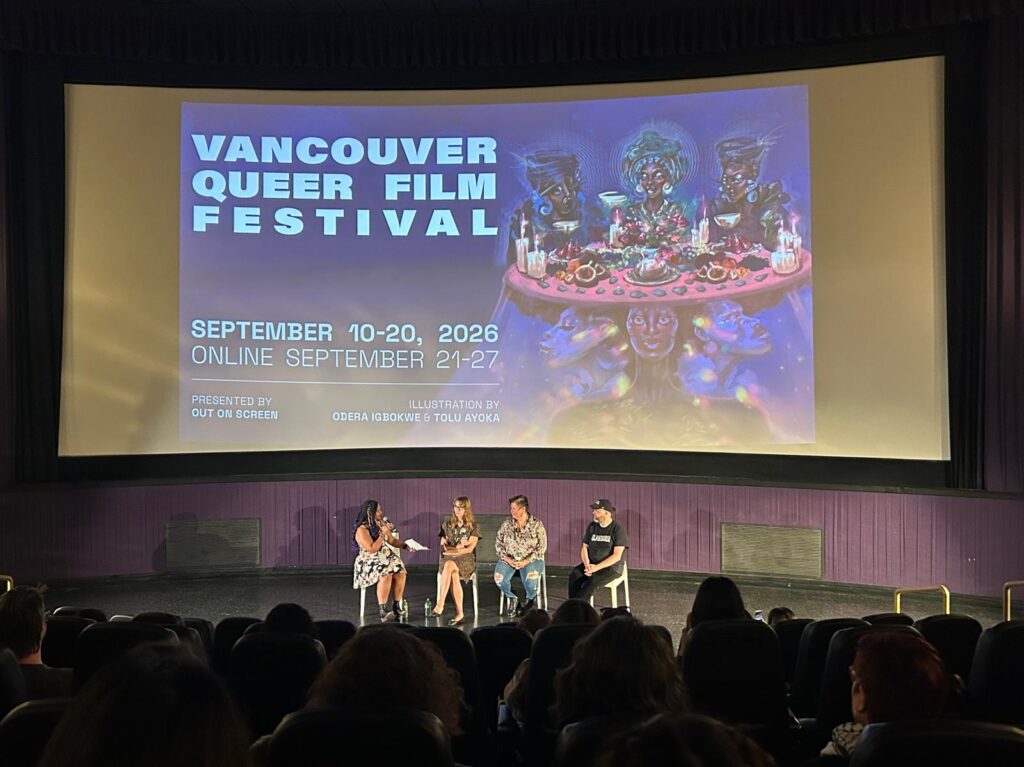
Co-directors Candace Campo and myself were in attendance to screen our film alongside May Caroline Matcham’s beautiful doc Understanding Myself as an Amphibian.
Our VQFF event celebrated the reimaging of nature documentaries through queer and Indigenous ways of knowing.
We were thrilled to share the work with Vancouver audiences for the first time.
Our new edit emerged from two years of community engagement screenings, including at Gibsons Public Art Gallery, Polygon Gallery, Sechelt Arts Fest, and in school screenings reaching 3,500+ incredible youth in the Sunshine Coast school district.
Beautiful questions and conversations evolved from these events that helped us shape the final film. We are so excited to begin sharing this joyful work with wider audiences.
Stay tuned for screenings in other cities in Canada and internationally, as we embark on the next stage of sharing these incredible stories of multispecies coexistence from the shíshálh swiya.
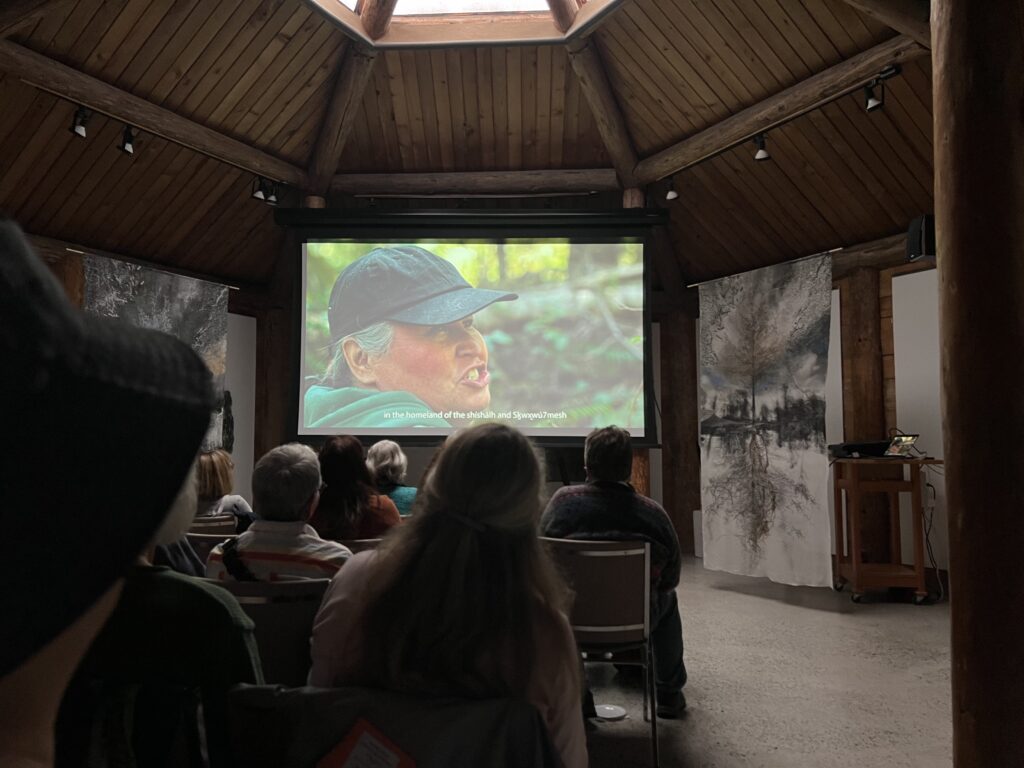
Nature Girl screened on closing night of the Sechelt Arts Festival 2025 at the Sechelt Arts Centre / ch’atlich, shíshálh Nation swiya – Photo by Blythe Wilde 29/09/2025
Screening Nature Girl and launching our new project Wanna grow a clam garden? at Sechelt Arts Fest
This past Sunday (September 29) my dear friend Candace Campo (xets’emits’a) and I had the joy of screening our short film collaboration Nature Girl on the closing night of the 2025 Sechelt Arts Festival.
Sharing our work publicly in ch’atlich (Sechelt) in the heart of the shíshálh Nation swiya (territory) was deeply special.
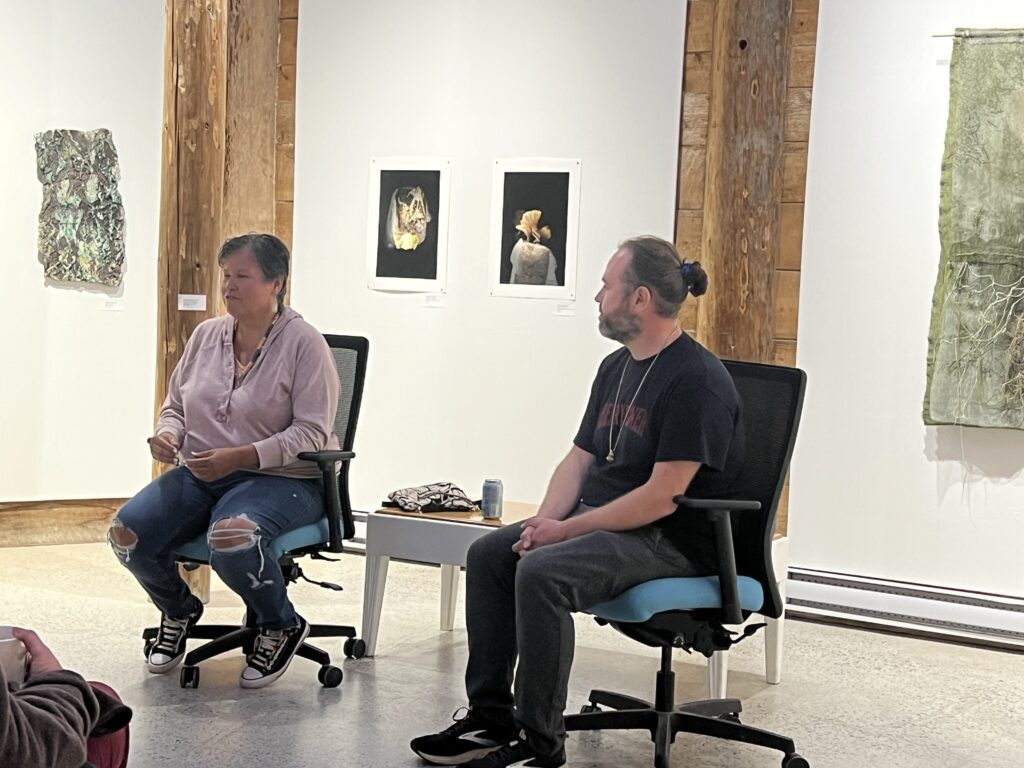
Candace and Trent speak after screening their short film Nature Girl at the Sinku (Open Water) Sechelt Arts Festival closing night event – Photo by Blythe Wilde 29/09/2025
The Sechelt Arts Centre was filled with friends, family, and community members, some of whom have been part of the journey from the very beginning over 5 years ago.
Hearing the responses to our latest edit—the laughter, the gasps, the “aww” sounds —reminded us why we do this work.
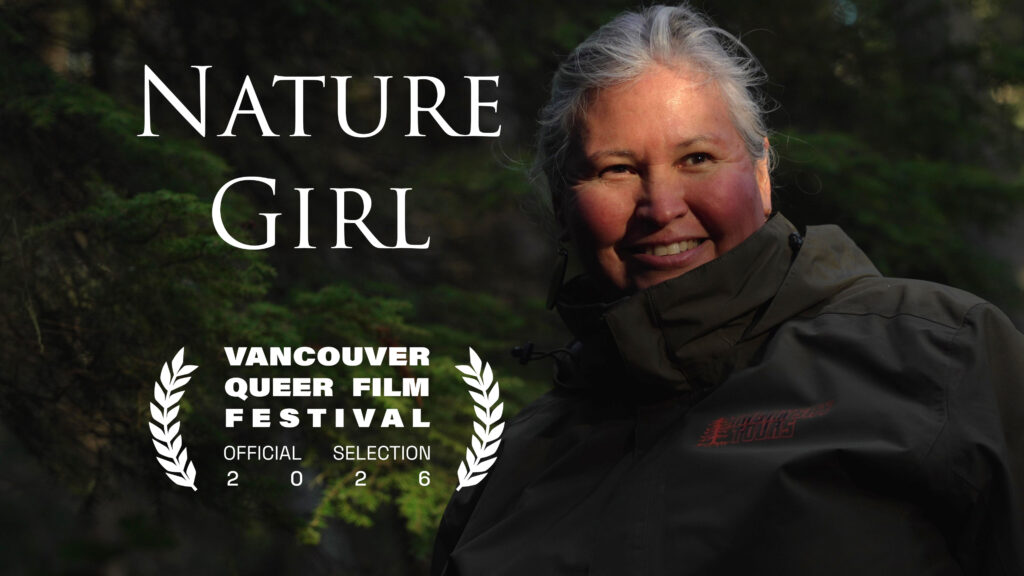
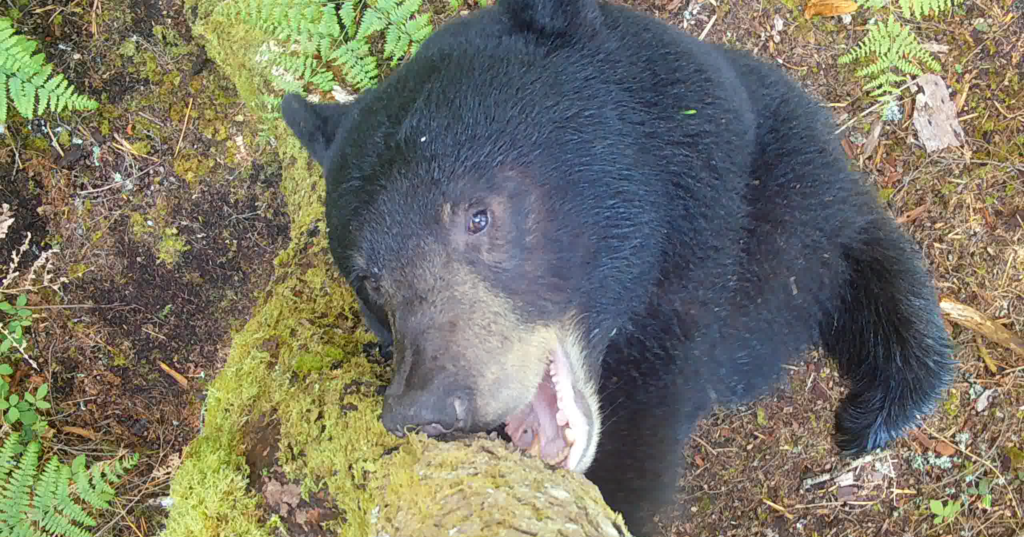
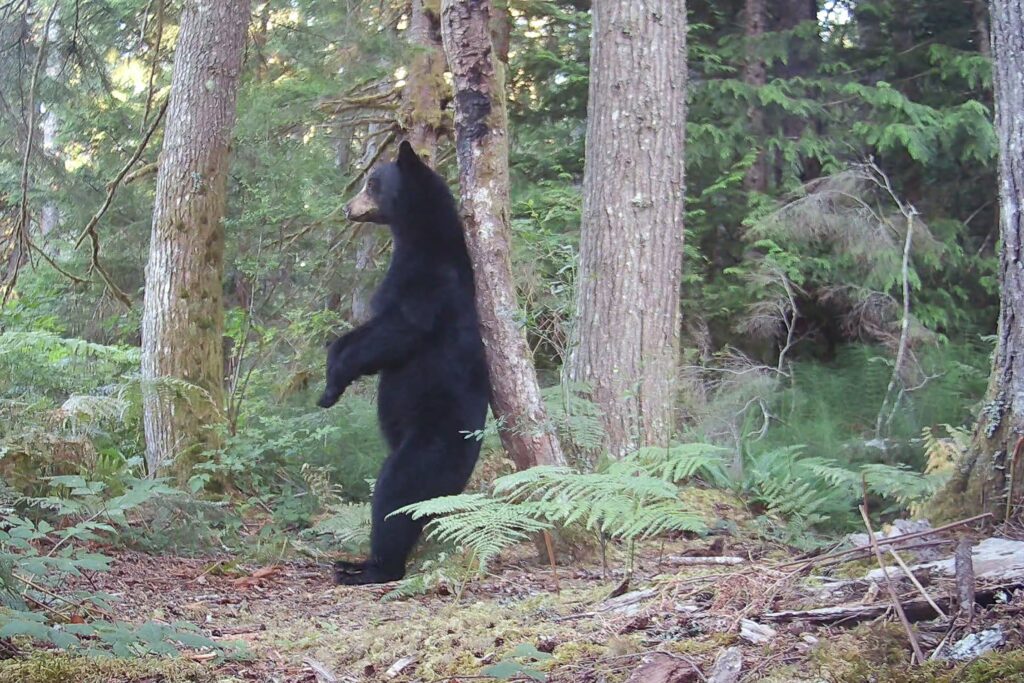
Still from Nature Girl (2025)
Nature Girl was made through years of gathering stories and medicine from the swiya using trail cameras, our poetry and regular visits.
The film is woven from listening to the forest, witnessing its many beings and their webs of interconnection, and weaving our observations with the traditional knowledge and stories passed down through the generations by Candace’s ancestors.
We are so grateful to everyone who came, and to those who continue to support Nature Girl as it reaches new audiences.
Nature Girl was made with support from Canada Council for the Arts.
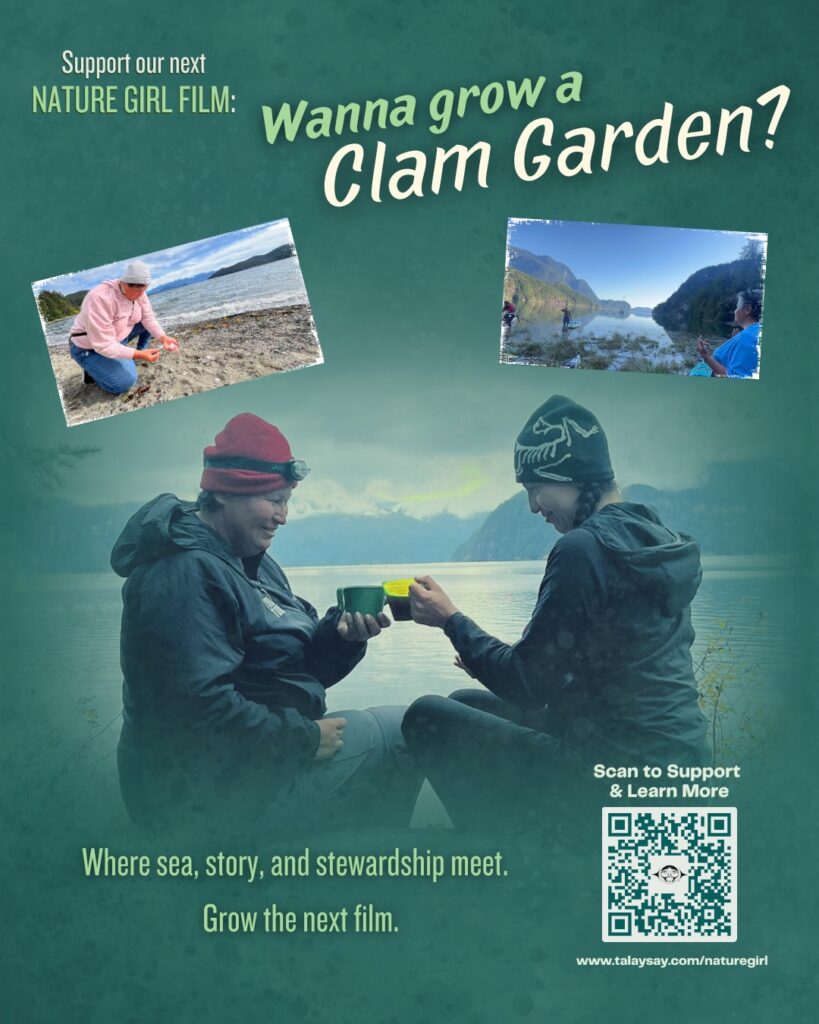
New Arts Research Project: Wanna Grow a Clam Garden?
We are so excited to announce our next research and development project for the next episode in the Nature Girl series: Wanna Grow a Clam Garden?
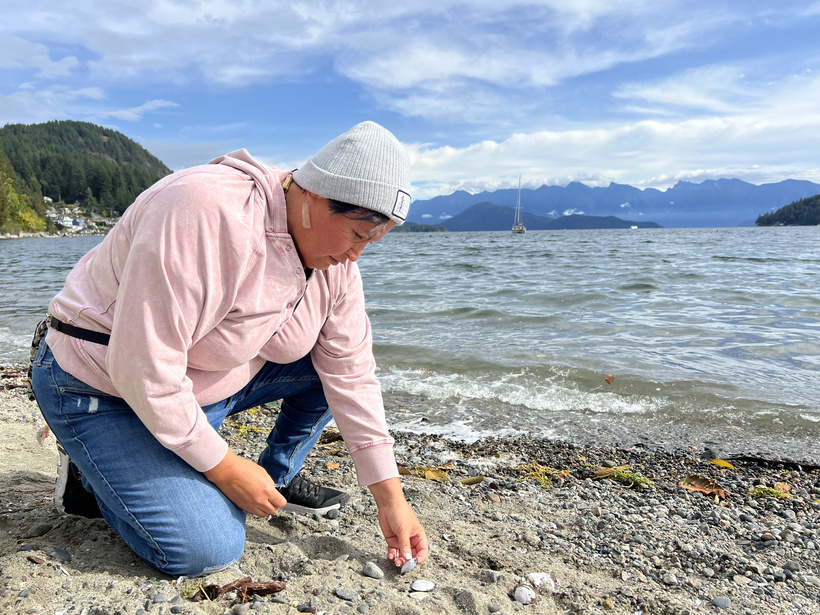
Clam gardens are ancient Indigenous technologies, with rock-walled terraces built along intertidal zones that enhance clam habitat and food security. They are both ecological wonders and cultural treasures.
Our project will explore these gardens as sites of relationship: between a wide community of interdependent species, between people and place, ancestors and descendants, food and survival.
This research and forthcoming film will bring together documentary storytelling, intertidal fieldwork, trail camera videos, poetry, painting and Indigenous knowledge sharing.
Just as Nature Girl invited audiences to visit a forest pool and a scratch tree, Wanna Grow a Clam Garden? will invite us down to the shoreline, to listen, learn, and imagine futures rooted in reciprocity.
Our goal is to uplift voices from the community and celebrate the passion and skills of our syiyaya (family/friends).
How You Can Support this work
Your support on my personal Trent Maynard Patreon page is a huge help! Every donation helps me spend a little bit more time devoted to this nature-based practice.
You can also donate directly to support our project fundraiser with Candace Campo for Wanna grow a clam garden?. Help us cover research trips, camera gear, editing time, and the countless small costs that allow big dreams to take shape.
As we move into the intertidal zone, we anticipate losing more gear than ever compared to working in remote forests ( we lost cams there too). We will need your support to pull this off.
Donate here to help get our next project kickstarted. Over the coming months, we will share more updates as this exciting new project takes root.
Thank you for walking this path with us. Your presence here means the world.
I grew up frolicking on the rocky coastal bluffs around Howe Sound (Átl’ka7tsem) in unceded Sḵwx̱wú7mesh Nation territories, where one of the most toxic plants in the Pacific Northwest grows.
These bluffs are home to rich meadows of Indigenous root crops—chocolate lilies, camas, Columbia tiger lily, and nodding onion—plants lovingly cultivated by Salish women for thousands of years.
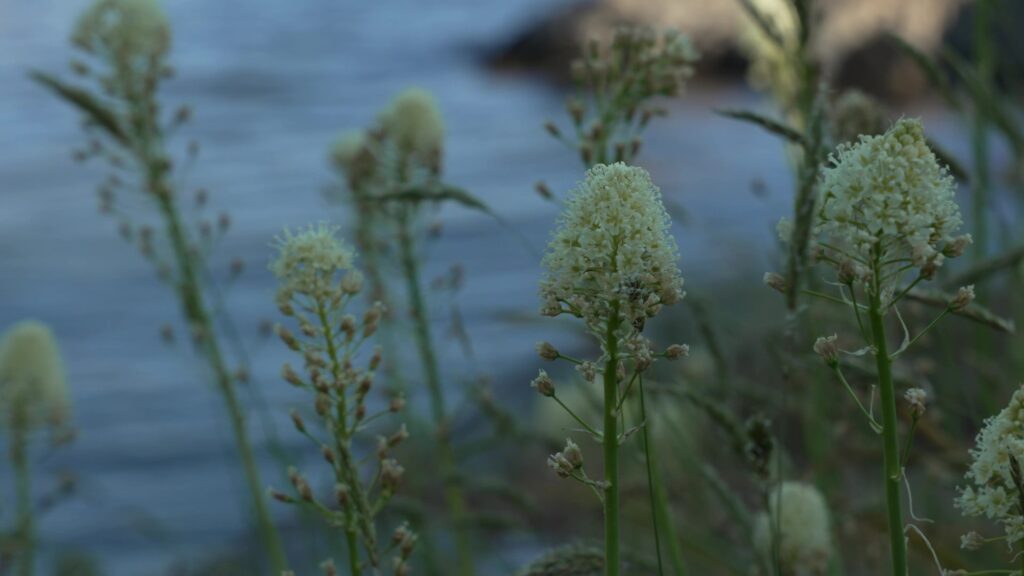
Among them grows the death camas (toxicoscordion venenosum), equally striking, but deadly.
Death Camas by the Salish Sea – still from Nature Girl (2025))
Mind your root crops
In early spring, the green foliage and creamy blossoms of death camas emerge from mossy rocks and meadows.
By autumn, when bulbs are traditionally harvested as root crops, death camas resemble some of their edible neighbours—long after their distinctive white-yellow blooms have vanished.
But while their bulbs resemble Indigenous onions, they lack the characteristic onion smell – a key indicator you’ve picked the wrong plant!
Harvesting root crops safely requires deep care, relationship and knowing.
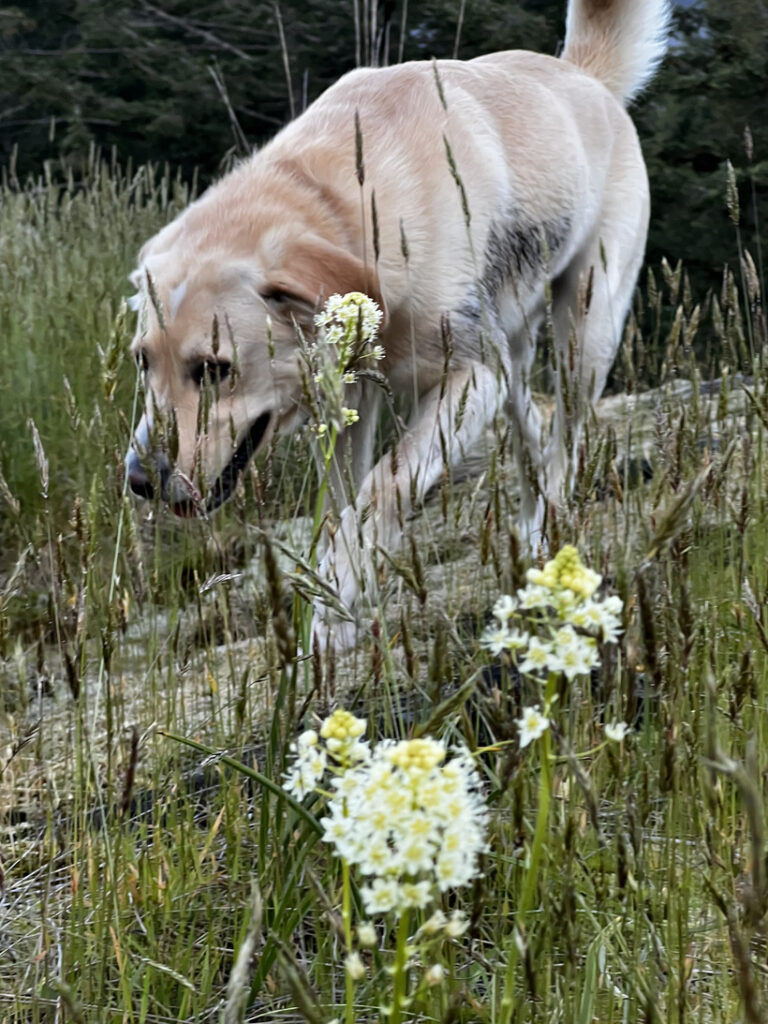
Charlie, a roaming island dog, frolics among death camas in the bluff meadows of Howe Sound (Átl’ka7tsem), 2025
Love in a time of zygacine
All parts of death camas—including bulbs, leaves, stalks and pollen—carry zygacine, a potent alkaloid that is toxic to humans and animals, and nearly all pollinators.
Ethnobotanist Nancy Turner (1980 et al) even notes that the Okanagan and St’at’imc peoples have used the poison from mashed bulbs to coat arrow heads.
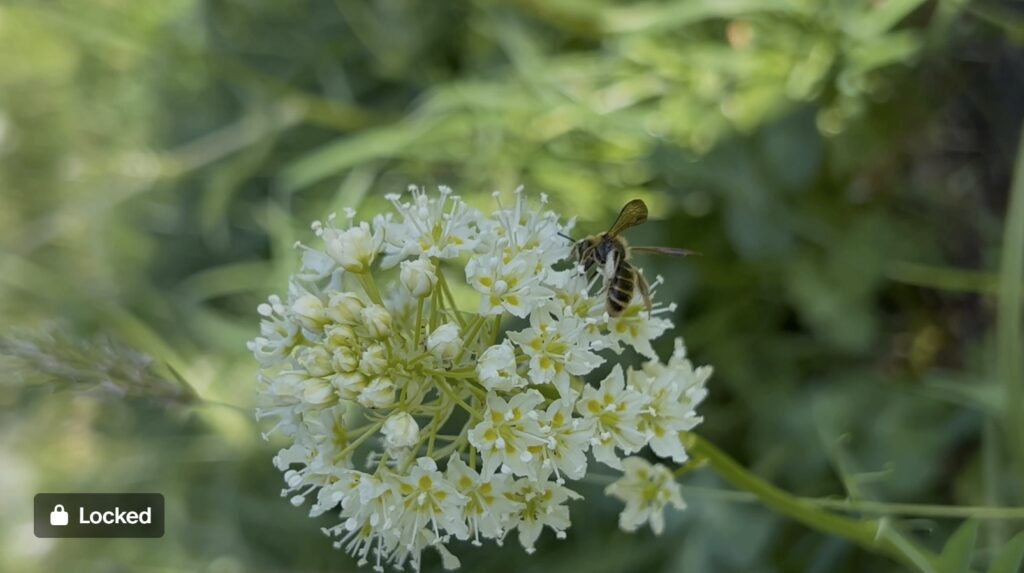
Yet one bee evolved to thrive on this toxic plant: the elusive death camas miner bee—one of more than 500 species of bees indigenous to BC.
After decades frolicking through death camas meadows, I’d yet to meet a single death camas miner bee.
For years, I asked other plant and pollinator nerds, “have you seen the death camas miner bee?”
Most hadn’t heard of it. Nobody had seen one.
I felt a yearning.
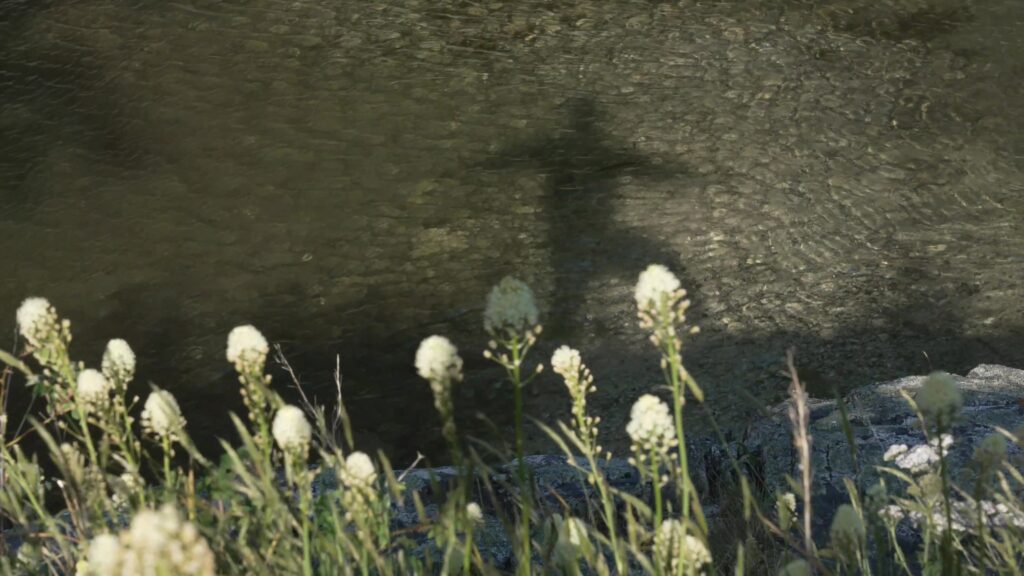
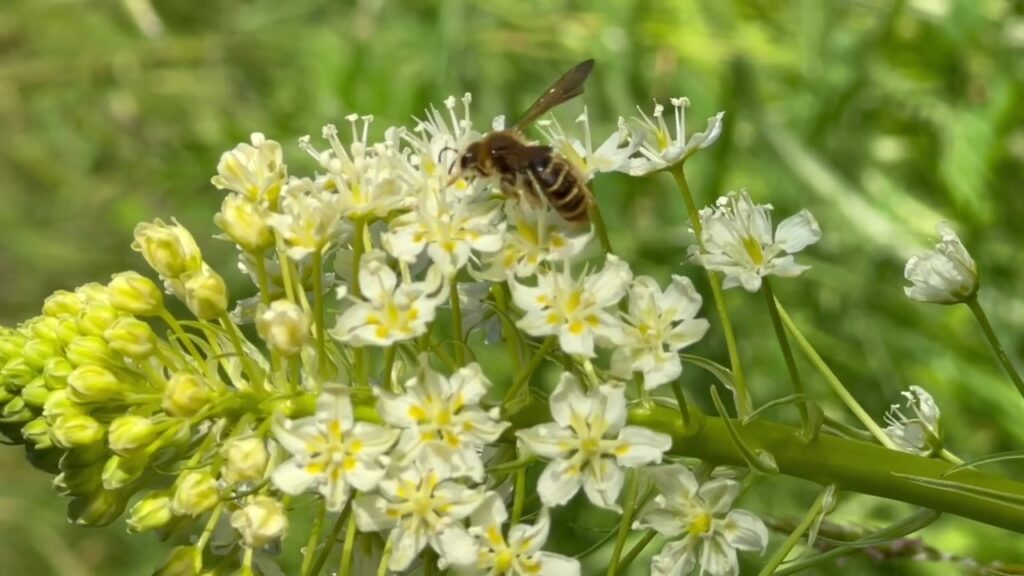
Death Camas in bloom by the Salish Sea – still from Nature Girl (2025)
My vigil for a specialty pollinator
Death camas features heavily in the opening sequence of my short film Nature Girl (2025), a collaboration with my friend Candace Campo, shíshálh knowledge keeper, artist and founder of Indigenous tourism company Talaysay Tours.
While spending time filming death camas meadows in spring 2023 and 2024, I was hoping a bee would finally reveal themselves, but to no avail.
It felt like holding vigil for a ghost pollinator, buzzing at the edge of science and memory.
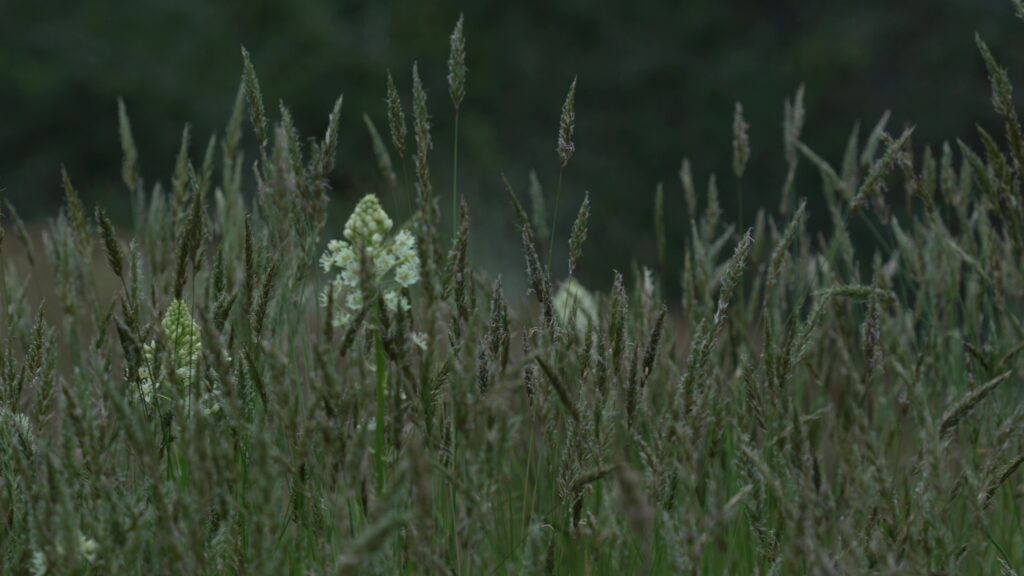
Death camas in tall meadow grass – still from Nature Girl (2025)
Pollinators in peril
Many specialty pollinators in the Coast Salish region are at risk from habitat loss and climate change impacts, including a rise in pollinator pathogens.
I couldn’t help but wonder: How are death camas miner bees faring?
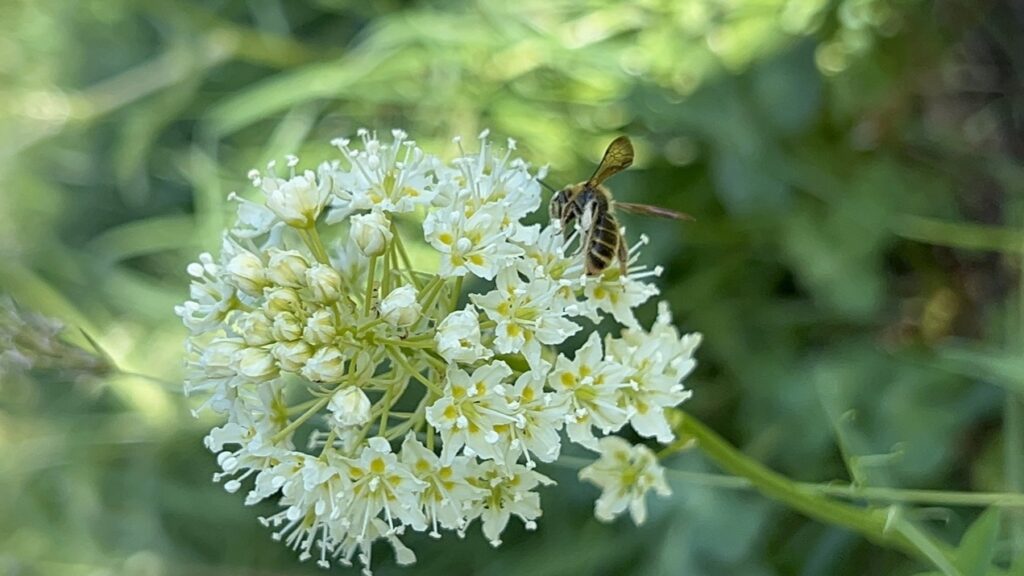
One day in May 2025, after years of waiting, watching, and wondering, I saw it: a flicker of movement on a death camas bloom.
The bee danced from blossom to blossom, then soared above our heads as I shouted to my friend, “get a photo!”
We tracked it with bated breath until it landed again, just long enough for me to press record. My heart was pounding. The long-awaited meeting was finally happening.
After years of holding vigil – it was here! My heart was full.
I offer up a poem to this underappreciated neighbour. This is a love letter for an ancient love affair between insect and plant; an ode to a mutuality mediated by a neurotoxin.
As far as toxic relationships go, it’s one to aspire to.
Poem: Love Letter to a Death Camas Miner Bee Trent Maynard
Year after year I watch these toxic flowers rise Bobbing their heads above the tall grass Growing slyly among the nodding onion Between chocolate lilies and tiger lilies Beguiling me with their gentle beauty A medicine for the eyes only Poison to most beings The poet included Empty blooms waiting Holding vigil Practically quivering on the Salish breeze Yearning for their lover The one bee who evolved to crave their poison nectar They rise for this beloved For the touch of familiar mandibles The caress of prickly feet The sweet vibrations of an undulating buttocks Today I hear a buzzing Thousands of years in the making Perched before me on a death flower Slender-waisted Long-winged Star of the vigil Death camas miner bee! Feasting upon their favourite poison Dusting pollen from the neighbours as they go Now zooming over our heads Pollen as life Pollen as death Each spring old friends rise to greet each other Finding a path In the balance of their gifts
This multimedia essay and poem was first published as a special offering for paid subscribers on my Patreon.
HAPPENING April 24, 2025 at 6:00 PM TO 7:30 PM Film Screening: “Nature Girl” (2025) – Polygon Gallery
Celebrate the arrival of spring with Candace Campo, and myself, Trent Maynard, as we present our film Nature Girl. After the screening, we will engage in a discussion moderated by Joelle Johnston, Indigenous Liaison and Community Outreach.
Doors at 6:00pm Screening at 6:30pm Discussion at 7:00pm
Polygon Gallery, North Vancouver, Unceded territories of the sḵwx̱wú7mesh (Squamish) Nation, səl̓ílwətaʔɬ (Tsleil-Waututh) Nation, and the xʷməθkʷəy̓əm (Musqueam) Nation.
Nature Girl (2024) 27 mins Director: Trent Maynard Writer: Candace Campo and Trent Maynard
Filmmaking duo Trent Maynard and Candace Campo spend five years documenting the surprising species living in a small wetland in the shíshálh Nation swiya. Using poetry and motion sensor cameras, this short film documents the intergenerational bear families using a multi-species scratching post and watering hole, alongside newts, frogs, elk, owls and bats.
About the Artists Candace Campo, ancestral name xets’emits’a (to always be there), is a Shíshálh (Sechelt) member from the Sunshine Coast, BC. As the co-founder of Talaysay Tours with her spouse Larry, and now co-owned with their daughter Talaysay Campo, Candace provides Indigenous cultural and outdoor experiences. Trained as an anthropologist and teacher, she shares the stories and history of her people, focusing on Indigenous language and cultural revitalization. Candace’s mission is to train younger Indigenous members to connect with the land while running a successful intergenerational tour and education business.
Trent Maynard is a writer, media artist, filmmaker, and citizen scientist, of mixed settler Canadian ancestry, including Germanic, Celtic & English. They were born and raised and live as a guest between Sḵwx̱wú7mesh Nation and shíshálh Nation lands. Their art practice makes relationships with ecosystems and multispecies fellow citizens, using motion-sensor cameras, word art, filmmaking and storytelling collaborations.
Generously supported by The Canada Council for the Arts
I’m giving away 5 delicious, nutritious wild-crafted mushroom prize packs for those who support! Donate between Dec 20-25 and forward me your confirmation email to enter. Details below.
Competition is open for residents of Metro Vancouver, the Lower Sunshine Coast, and Nanaimo-Parksville-Qualicum. Those living outside these areas in Canada can still qualify to enter by donating $50 or more, to be eligible for Canada-wide shipping.
One entry granted per $10 increment donated (ex. $30 = 3 entries). See full terms and conditions below.
UPDATE: Raffle is now closed, but the family fundraiser is still open for donations:
Explore an ancient mountaintop forest in Sḵwx̱wú7mesh Úxwumixw (Squamish Nation) territories on the Sunshine Coast, British Columbia, Canada.
This undisturbed forest in the Dakota Community Watershed boasts thousand-year-old cedars and 77 registered Sḵwx̱wú7mesh Úxwumixw archaeological sites where yellow cedars were stripped for their fine inner bark, and continued on living.
Registered professional bear biologist Wayne McCrory notes its unusual density of active black bear dens. Coastal black bears rely on old growth trees for winter denning, and McCrory speculates that loss of suitable denning habitat in the surrounding Mount Elphinstone area is leading to unusual accumulations of den sites in higher elevations.
The Dakota Bear Sanctuary was twice proposed for logging by BC Government agency BC Timber Sales. It received a one-year deferral by the NDP government in October 2020, days before the provincial election.
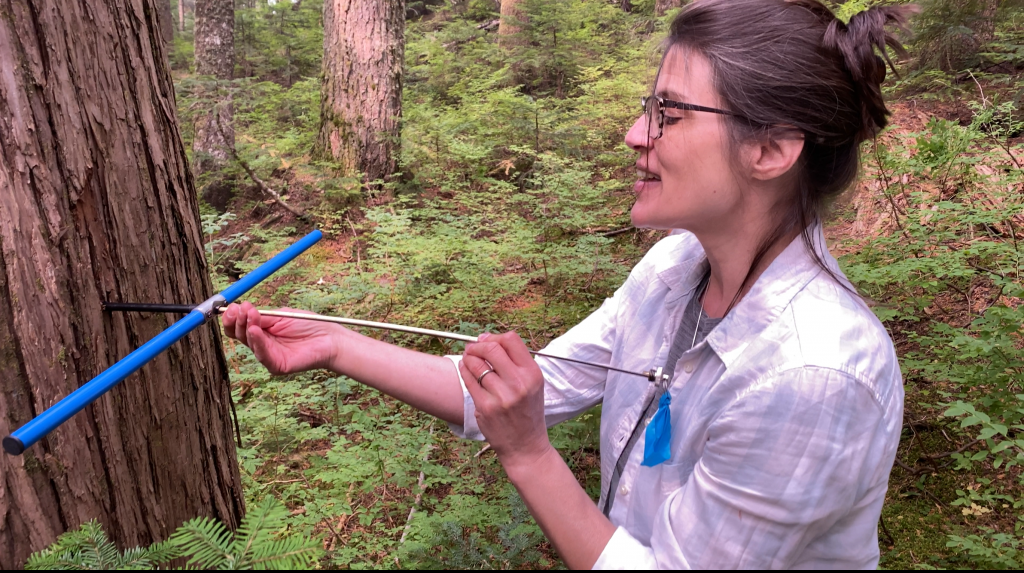
Dr. Nina Hewitt of UBC Vancouver Department of Geography cores a yellow cedar (Photo by Trent Maynard)
How to age a tree with a coring device
An increment borer – basically a corkscrew for trees – is the classic non-lethal, non-invasive solution for aging trees.
The device removes a tiny strip of the tree’s cross section to reveal the annual growth rings hidden inside the trunk.
Coring a tree “is about the equivalent for the tree of losing a small branch,” says Dr. Nina Hewitt of UBC Vancouver Department of Geography.
“The tree will immediately put some sap in there and then it’ll very quickly seal over that.”
A tree’s cross section also reveals information about local environmental history, including climate conditions, extreme weather events, pest epidemics, indigenous harvesting and the health of salmon runs over its lifetime. For the oldest trees, this biological database can stretch back into the thousands of years.
Cross-dating neighbouring trees can improve accuracy and reveal missing or double rings, which happen in years of extreme seasons or drought.
Watch below as Dr. Nina Hewitt tours an ancient yellow cedar forest known as the Dakota Bear Sanctuary in Sḵwx̱wú7mesh (Squamish) territory on Mount Elphinstone (Sunshine Coast, BC, Canada).
Dr. Hewitt explains the basic principles of dendrochronology, the science of dating trees according to annual rings.

 Generously supported by The Canada Council for the Arts